Price Optimization & Margin Intelligence for Retail
Built an end-to-end price optimization platform combining elasticity modeling and genetic algorithms to enable data-driven pricing decisions, improve margin realization, and automate pricing workflows for a large FMCG retailer.
1The Problem
A large FMCG retailer relied on rule-based and manual pricing decisions, leading to margin leakage, inconsistent competitiveness, and high operational effort. Key challenges: - Limited understanding of price–demand elasticity at item level - No systematic way to balance margin vs volume trade-offs - High manual effort in updating prices - Lack of visibility into pricing performance for leadership - Competitive pressure from nearby stores and dynamic pricing environments Pricing complexity was amplified by demand volatility, short product shelf life, and high sensitivity to price changes.
2The Approach
I designed a pricing intelligence platform combining interpretable econometric modeling with advanced optimization techniques. Key decisions: - Use multi-linear regression for price elasticity modeling to ensure interpretability and stakeholder trust - Build item-level elasticity models controlling for seasonality and external factors - Use a genetic algorithm to solve constrained, non-linear price optimization problems - Introduce constraint-based optimization to balance profitability and competitiveness - Automate the full pipeline from data ingestion to price recommendation and execution
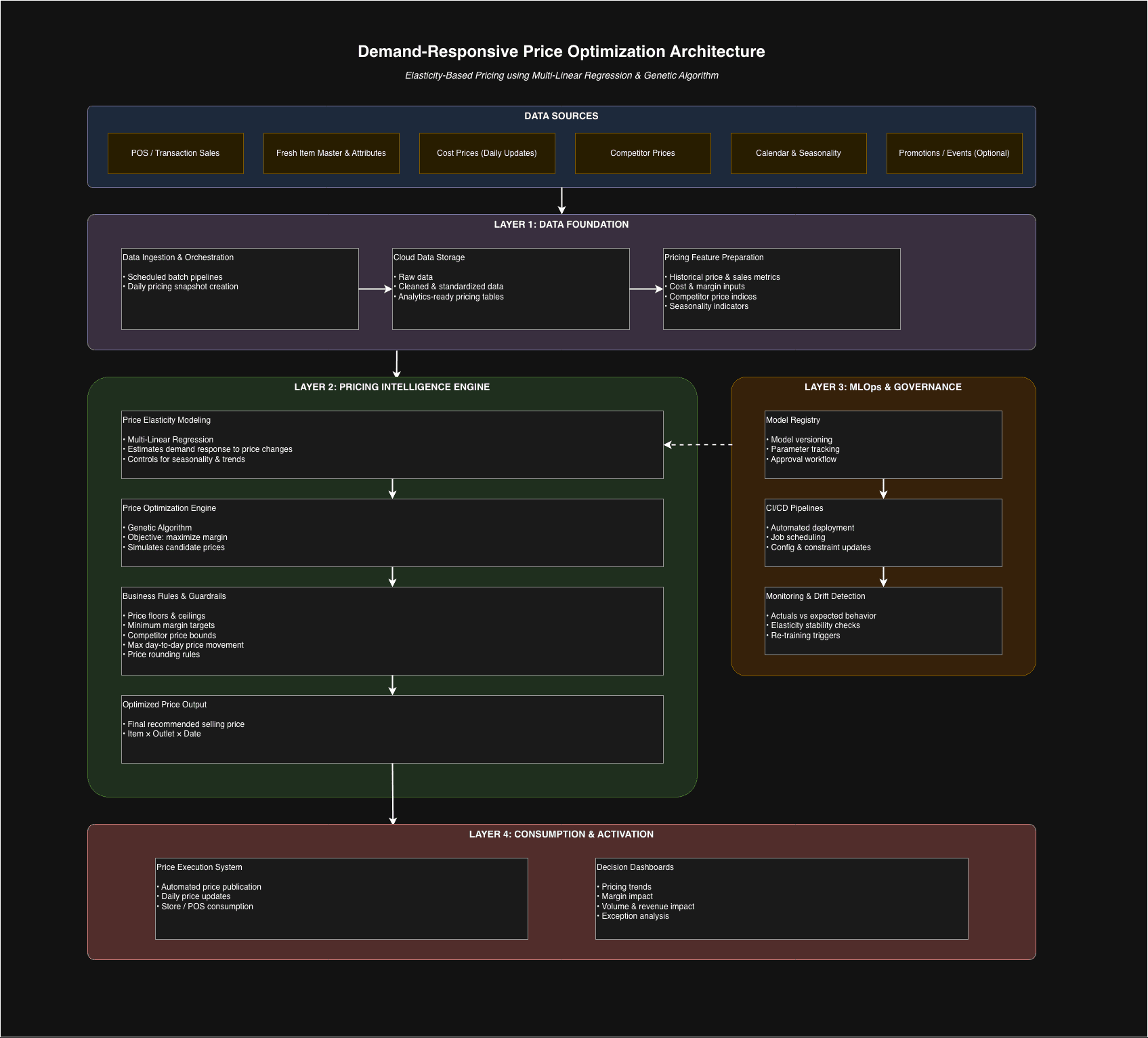
Technical Architecture
Data Layer: POS sales data, cost prices, competitor pricing, product attributes, and calendar features
Data Processing Layer: Automated pipelines in Azure Databricks with data sourced from Azure File Storage
Feature Engineering Layer: Demand signals, pricing variables, seasonality, and external drivers
Elasticity Modeling Layer: Multi-linear regression models generating item-level price elasticity coefficients
Optimization Engine: Genetic algorithm optimizing price points under business constraints
MLOps Layer: Model versioning using Databricks Model Registry and CI/CD via Azure DevOps
Execution Layer: Integration with Order Management Systems (OMS)
Monitoring Layer: Power BI dashboards for pricing performance, margin tracking, and decision support
Results
Enabled data-driven pricing decisions across product categories
Improved margin realization while maintaining competitive pricing
Reduced manual effort in pricing operations
Increased transparency and visibility into pricing impact for leadership
Established a reusable pricing optimization framework
Key Insights
“Elasticity modeling provides a strong economic foundation for pricing decisions”
“Optimization must incorporate real-world constraints to be practically usable”
“Genetic algorithms are effective for complex, constrained pricing problems”
“Explainability is essential for adoption in pricing and business teams”
“Automation is critical for scaling pricing strategies across categories”
Tech Stack
Interested in a similar project?
I'd love to discuss how we can apply this kind of approach to your specific business challenge.
Let's Talk